
Riaz ul Jannah: A Garden from the Gardens of Paradise
Riaz ul Jannah is one of the most sacred places in Islam. Located inside Masjid an-Nabawi in Madinah, it is a small but extremely blessed area between the house of Prophet Muhammad ﷺ and his pulpit (minbar). Muslims from all over the world dream of visiting this special place because the Prophet ﷺ described it as a garden from the gardens of Paradise.
For believers, Riaz ul Jannah is not just a physical space. It is a symbol of closeness to the Prophet ﷺ, love for the Sunnah, and a reminder of the beauty of Jannah. Standing there brings deep spiritual emotions, tears, gratitude, and hope for Allah’s mercy.
In this article, we will explore Riaz ul Jannah from every angle: its history, location, virtues, significance in the light of Quran and Hadith, and the etiquettes of visiting it. By understanding its importance, our hearts become more connected to Madinah and the message of Islam.
What is Riaz ul Jannah?
The term “Riaz ul Jannah” (Rawdah) means “a garden from Paradise.” It refers to a specific area inside Masjid an-Nabawi. The Prophet Muhammad ﷺ said:
“Between my house and my pulpit is a garden from the gardens of Paradise.”
(Sahih al-Bukhari, Sahih Muslim)
This authentic hadith is the foundation of the importance of Riaz ul Jannah. Scholars explain that this area is blessed in a special way. Worship performed here carries great spiritual reward and peace.
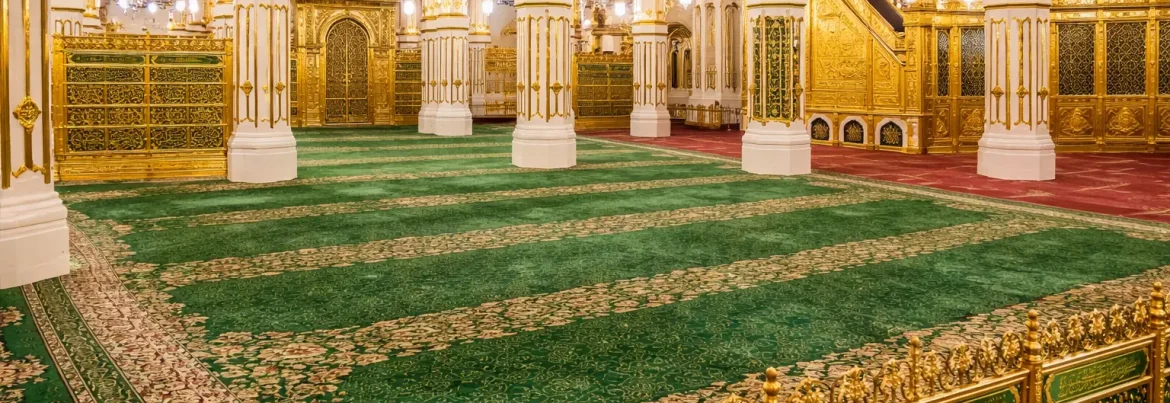
Today, Riaz ul Jannah is marked by a green carpet, which makes it easy to identify inside the mosque. The rest of the mosque is covered in red carpet, so visitors immediately recognize this sacred space.
History of Riaz ul Jannah in Masjid an-Nabawi
To understand Riaz ul Jannah, we must look back to the time of the Prophet ﷺ.
When the Prophet ﷺ migrated from Makkah to Madinah (Hijrah), the first major project of the Muslim community was building Masjid an-Nabawi. The Prophet ﷺ personally participated in its construction. His simple home was attached to the mosque, built with mud bricks and palm trunks.
The area between his house and the pulpit later became known as Riaz ul Jannah. This was a place where the Prophet ﷺ prayed, taught companions, and delivered sermons. Many important events in Islamic history happened within this blessed space:
-
Teaching of the Quran
-
Guidance on faith and worship
-
Community decisions
-
Spiritual gatherings of the Sahabah
After the Prophet’s passing, he was buried in the room of Aisha (RA), which was his home. That area is now part of the mosque and lies adjacent to Riaz ul Jannah, increasing its emotional and spiritual value.
Over the centuries, Masjid an-Nabawi expanded many times under different Muslim rulers. Despite these changes, the location of Riaz ul Jannah has always been preserved and honored.
Significance in the Light of Hadith
The strongest evidence of the importance of Riaz ul Jannah comes from authentic hadith.
The Prophet ﷺ clearly described it as a garden from Paradise. Scholars have offered two main interpretations:
-
Literal meaning: It is physically connected to Paradise in a way known only to Allah.
-
Spiritual meaning: Worship there leads a person closer to Paradise.
Both interpretations highlight the extraordinary blessing of this place.
Praying in Riaz ul Jannah brings peace to the heart. Many pilgrims say they feel a calmness there that is difficult to describe. It is a reminder of the Prophet’s presence and his lifelong mission to guide humanity.
Connection with the Quran
While Riaz al Jannah is not directly mentioned by name in the Quran, its significance is deeply connected to Quranic themes:
-
Love for the Prophet ﷺ
-
Respect for sacred places
-
Desire for Paradise
-
Following divine guidance
Allah says in the Quran:
“Indeed in the Messenger of Allah you have an excellent example.”
(Quran 33:21)
Riaz ul Jannah represents the living legacy of that example. It is a space where the Quran was taught, explained, and practiced. Standing there reminds Muslims of the importance of learning and living the Quran in daily life.
Booking Entry Through the Nusuk App
Today, due to the large number of visitors from around the world, entry to Riaz al Jannah is organized through an official digital system. Pilgrims are required to book a time slot using the Nusuk app, which is approved by the Saudi authorities.
After booking, the app generates a QR code that acts as your entry pass. When you arrive at the designated gate of Masjid an-Nabawi, security staff scan and verify the QR code before allowing entry. This system helps manage crowds, ensures safety, and gives every visitor a fair opportunity to pray in the blessed area.
It is recommended to book your slot in advance, check the timing carefully, and arrive early so you do not miss your scheduled entry. Having patience and following the instructions of the mosque staff is part of good Islamic etiquette and respect for sacred places.
Etiquettes of Visiting Riazul Jannah
Islam teaches good manners in sacred places. When visiting Riaz ul Jannah, pilgrims should:
-
Be patient – Avoid pushing or arguing.
-
Maintain silence – Keep the atmosphere peaceful.
-
Focus on worship – Pray and make dua sincerely.
-
Respect others – Everyone deserves the chance to pray.
-
Follow instructions – Respect mosque staff and guidelines.
The goal is not just to enter the area, but to behave in a way that pleases Allah and reflects the character taught by the Prophet ﷺ.
A Reminder to Strengthen Our Relationship with the Quran
Riaz ul Jannah is a powerful reminder that Islam is built on knowledge, worship, and character. The Prophet ﷺ transformed hearts through teaching the Quran with love and patience.
Even if we are far from Madinah, we can bring the spirit of Riaz ul Jannah into our homes by connecting with the Quran daily.
Learning to read the Quran correctly, understanding its meaning, and teaching it to our children is one of the greatest acts of worship. Our online Quran classes aim to continue the prophetic tradition of teaching with care, discipline, and sincerity. Through one-on-one sessions, qualified tutors, and structured lessons, students of all ages can develop a lifelong connection with the Book of Allah.
In this way, every home can become a small garden of peace and guidance.
Why Muslims Long to Visit Riaz ul Jannah
The longing to visit this sacred place comes from love. Love for:
-
The Prophet Muhammad ﷺ
-
His mosque
-
His city, Madinah
-
The promise of Paradise
Many Muslims save money for years just to stand in that blessed place for a few moments. It represents hope, forgiveness, and closeness to Allah.
Even those who have visited once dream of returning. Madinah has a special tranquility that touches the soul. The Prophet ﷺ made dua for blessings in the city, and believers continue to feel those blessings today.
Conclusion
Riaz ul Jannah is one of the most blessed places on Earth. It is a living connection to the Prophet Muhammad ﷺ and a reminder of Paradise. Its history, spiritual importance, and emotional impact make it a dream destination for every believer.
But its true message goes beyond visiting a physical location. It calls us to revive the teachings of the Prophet ﷺ in our homes, hearts, and communities.
May Allah grant us the honor of visiting this sacred garden and grant us a place in the eternal gardens of Paradise. Ameen.
